Member of the Month: Bethany Carr
Every month, NASAGA celebrates one of our amazing members and the work they do. April’s Member of the Month is Bethany Carr, Esq., a past NASAGA board chair.
What kind of work do you do?
Attorney, Author, and, of course, Educator.
Why are you a NASAGA member?
In grad school, I met JS Bragg, past NASAGA conference chair, who suggested I check out this really amazing organization. From the very first conference, I knew I had found my professional home. This is the kind of community where when you ask them to think outside of the box, you’re asked “what box?”.
There is something so satisfying about being around others just as passionate about learning through play, and it’s an added bonus to be able to return from the conferences with concrete ideas that can immediately be put into action.
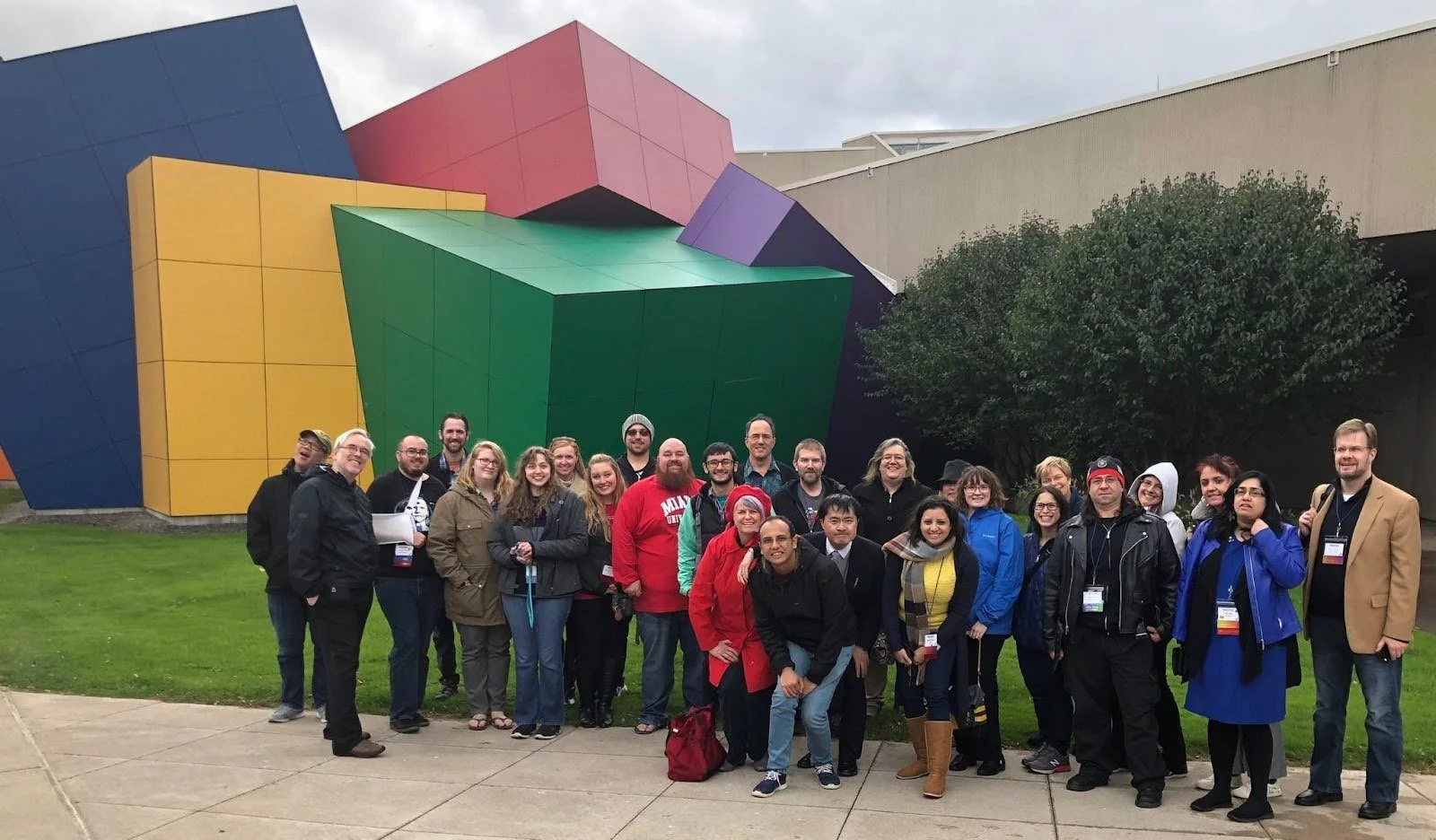
NASAGA at the Museum of Play for the 2018 Annual Conference.
What’s your favorite NASAGA memory?
After a decade of being connected with NASAGA, I could probably write a book in answer to this question.
Some of my top favorites include working with the board to convert our conference into a wholly online opportunity during COVID where we had some of the largest numbers in attendance from across the world, and intentionally pairing up with Becky Reese, another past board chair, in some of the other conference sessions to see how chaotic I could make our world builds.
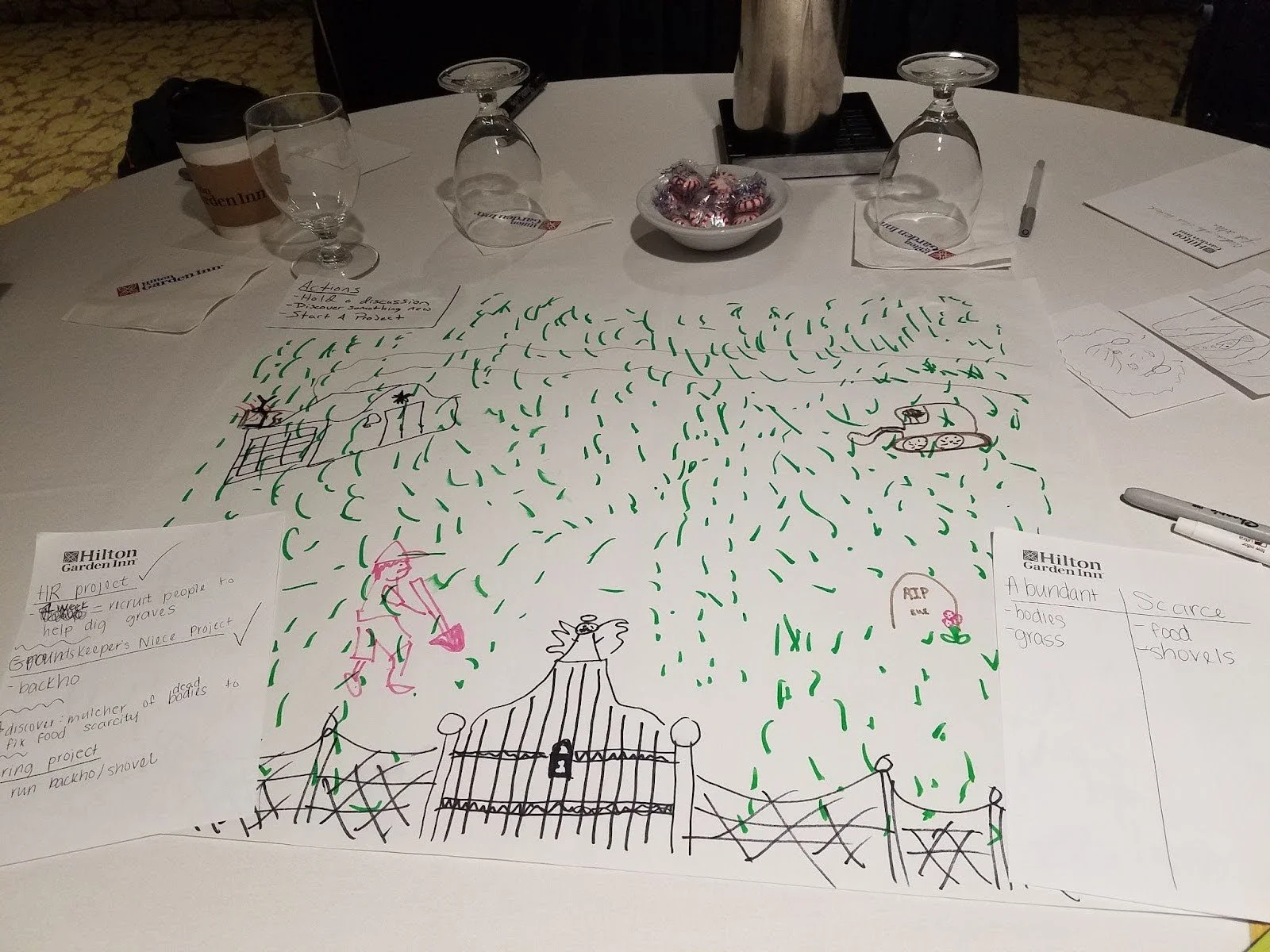
Worldbuild at Annual Conference of a Successful Graveyard Exploring Concepts of Supply and Demand.
And, I would be remiss to not mention playing Blood on the Clocktower my first time at one of the conferences, somehow winning as the lead demon…. and this still haunting me at conferences to this day.
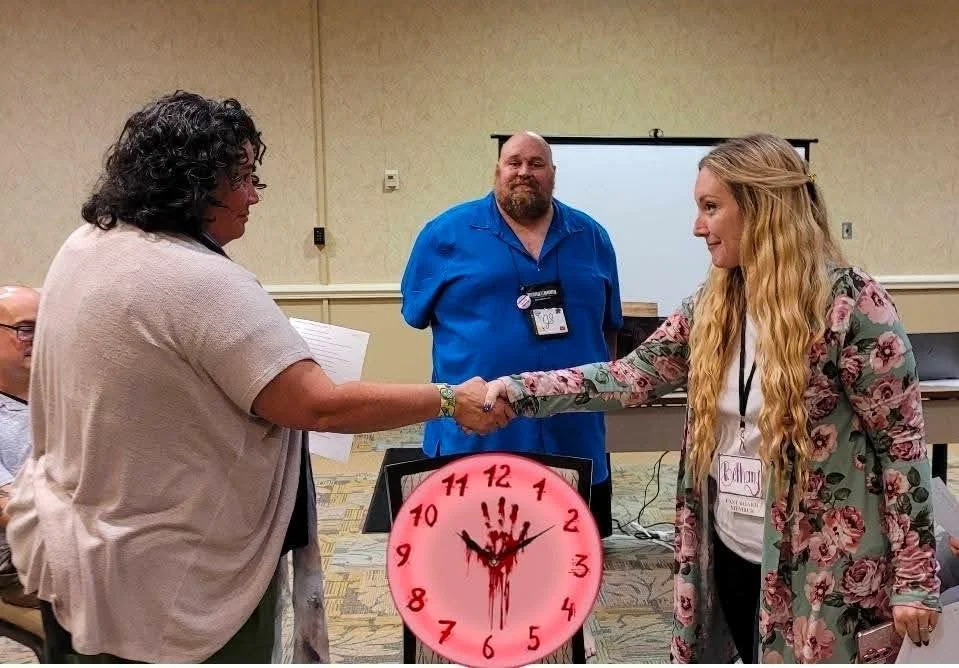
Continuing the Blood on the Clocktower deception… I mean, “tradition” year after year.
NASAGA’s theme for the 2026 Conference is “Sustaining Human Connection through Play in the Digital Age.” What does “Sustaining Human Connection” look like in your space?
There is an old adage that the only constant is change. This is reflective of today’s world, where technology is constantly changing and so is our need for human connection in this digital world. I believe in ethically embracing technological advances to make learning more accessible.
Much of my work has taken place in highly structured environments: higher education and law. Both spaces rely heavily on procedures, documentation, and increasingly digital systems. While these tools increase efficiency, they can also unintentionally depersonalize interactions. Sustaining human connection in these settings requires intentional design: spaces where play, curiosity, and shared experiences remind us that behind every form, policy, or case file is a human story.
It is helpful when we find technology that can automate tasks, but having that human touch is what takes the experience from helpful to memorable. And, after all, isn’t that what we aim for as educators and trainers?
For me, sustaining human connection means ensuring that even in our most structured and digital spaces, there remains room for curiosity, collaboration, and the simple joy of being human together.